

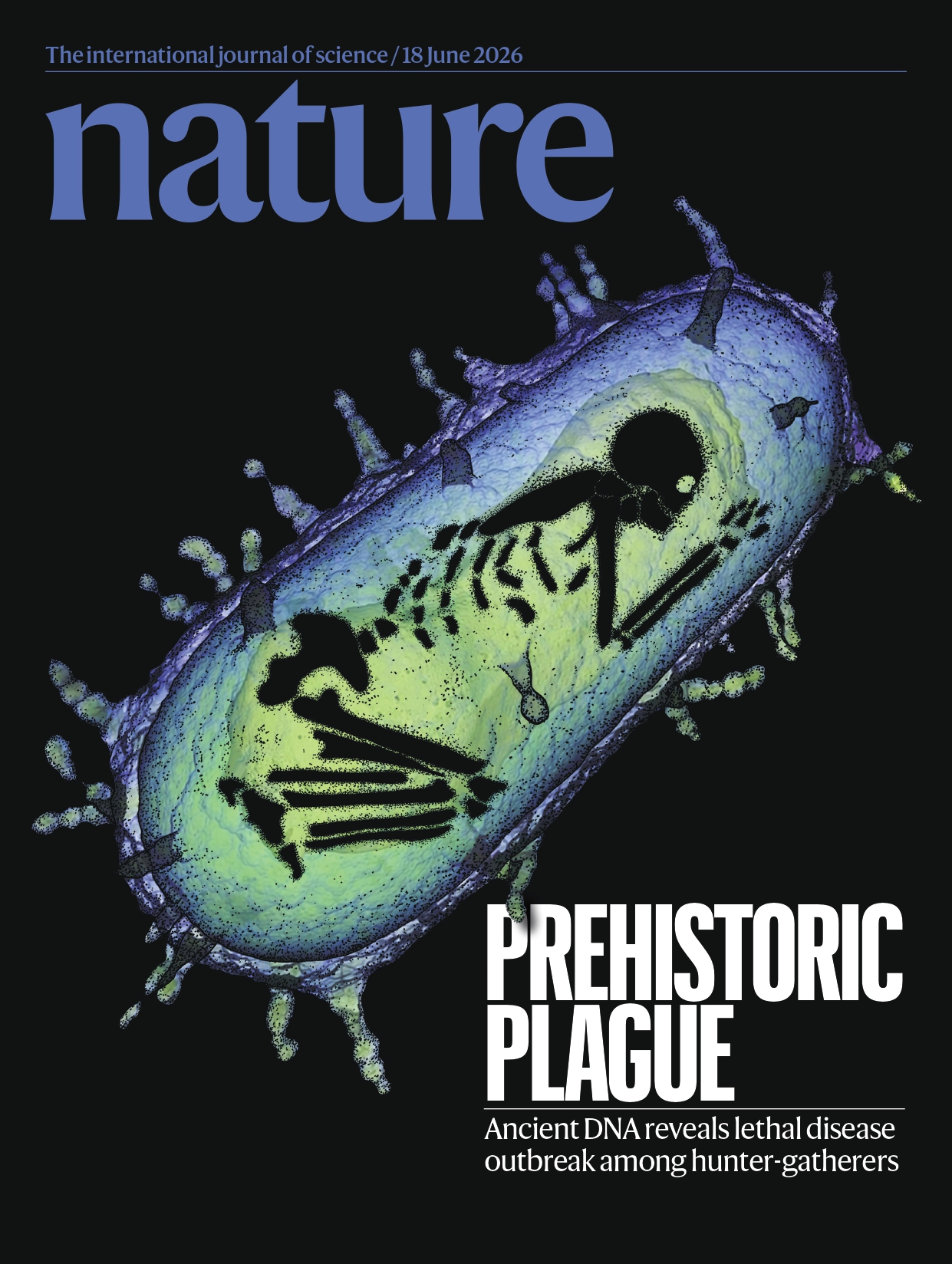
Big congratulations to Dr. Ruairidh Macleod and all co-authors on the recent publication of their article in Nature!
Title: Lethal plague outbreaks in Lake Baikal hunter-gatherers 5,500 years ago
Authors: Ruairidh Macleod, Frederik V. Seersholm, Bianca De Sanctis, Angela Lieverse, Adrian Timpson, Rick Schulting, Jesper T. Stenderup, Charleen Gaunitz, Lasse Vinner, Olga Ivanovna Goriunova, Vladimir Ivanovich Bazaliiskii, Sergei V. Vasilyev, Erin Jessup, Yucheng Wang, Christopher Bronk Ramsey, Mark G. Thomas, Russell Corbett-Detig, Astrid K. N. Iversen, Andrzej W. Weber, Martin Sikora & Eske Willerslev
Abstract: Plague is among the most devastating diseases in human history1. However, early strains of the plague-causing bacterium Yersinia pestis lacked virulence factors that are required for the bubonic form until around 3,800 years ago2,3. Consequently, the morbidity and mortality of early plague strains remain unclear. Here we describe early plague strains that are associated with two phases of outbreaks among mid-Holocene hunter-gatherers near Lake Baikal in southeast Siberia, beginning from about 5,500 years ago. These outbreaks occur across four hunter-gatherer cemeteries, with a 39% detection rate for plague infection. By reconstructing kinship pedigrees, we show that small familial groups were affected, consistent with human-to-human spread of disease, and that the first outbreak occurred within a single generation. The infections appear to have resulted in acute mortality, especially among children (aged 8 to 11 years). We further note functional differences, including in the ypm superantigen locus, which is also present in present day Yersinia pseudotuberculosis. The new strains diverge ancestrally to known Y. pestis and constrain the timing of its emergence, indicating that this happened before approximately 5,700 years ago. These findings show that plague outbreaks happened earlier than previously thought and were indeed lethal. We contend that the occurrence of outbreaks among mid-Holocene hunter-gatherer communities well outside the sphere of Late Neolithic Europe challenges the notion that higher population densities and lifestyle changes during the Neolithic agricultural transition were prerequisites for plague epidemics.
Kudos and congratulations to Ruairidh and all co-authors!
P.s. Link to CBC news article entitled “Earliest outbreak of the plague killed hunter-gatherer kids 5,500 years ago”