Ramsey

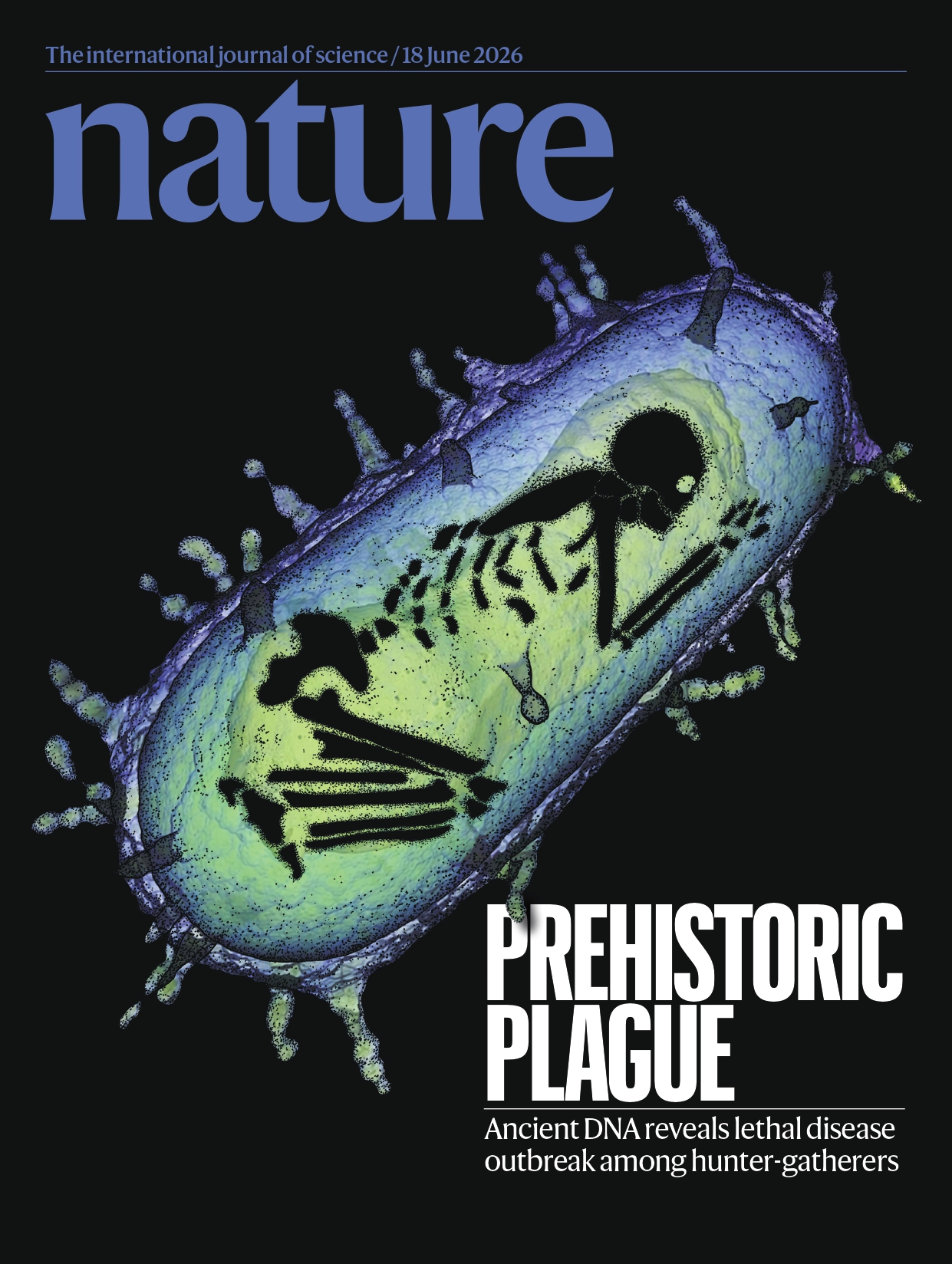
Lethal plague outbreaks in Lake Baikal hunter–gatherers 5,500 years ago

Plague is among the most devastating diseases in human history. However, early strains of the plague-causing bacterium Yersinia pestis lacked virulence factors that are required for the bubonic form until around 3,800 years ago. Consequently, the morbidity and mortality of early plague strains remain unclear. Here we describe early plague strains that are associated with two phases of outbreaks among mid-Holocene hunter-gatherers near Lake Baikal in southeast Siberia, beginning from about 5,500 years ago. These outbreaks occur across [...]


Recent article from Dr. Ruairidh Macleod published in Nature!

Big congratulations to Dr. Ruairidh Macleod and all co-authors on the recent publication of their article in Nature! Title: Lethal plague outbreaks in Lake Baikal hunter-gatherers 5,500 years ago Authors: Ruairidh Macleod, Frederik V. Seersholm, Bianca De Sanctis, Angela Lieverse, Adrian Timpson, Rick Schulting, Jesper T. Stenderup, Charleen Gaunitz, Lasse Vinner, Olga Ivanovna Goriunova, Vladimir Ivanovich Bazaliiskii, Sergei V. Vasilyev, Erin Jessup, Yucheng Wang, Christopher Bronk Ramsey, Mark G. Thomas, Russell Corbett-Detig, Astrid K. N. Iversen, Andrzej W. [...]

BAP article published in Radiocarbon!

Great News! Congratulations to BAP team members Rick Schulting, Ian Scharlotta, Angela Lieverse, Erin Jessup, Christopher Bronk Ramsey, Vladimir Bazaliiskii and Andrzej Weber on the recent publication of their article in Radiocarbon! Radiocarbon (January 2025), pp 1-13. Title: A 350 14C yr discrepancy between bone and tooth dates from the same grave at the Early Neolithic cemetery of Shamanka II, Lake Baikal, southern Siberia: reservoir effects or a misplaced mandible? Authors: Schulting RJ, Scharlotta I, Lieverse A, Jessup [...]

2025-01-22T14:11:55-07:00Categories: News|Tags: , , , , , , |

A 350 14C yr discrepancy between bone and tooth dates from the same grave at the Early Neolithic cemetery of Shamanka II, Lake Baikal, southern Siberia: reservoir effects or a misplaced mandible?

A 350 14C yr discrepancy was found between dates on postcranial remains and mandibular teeth on what was thought to be the same individual from the Early Neolithic cemetery of Shamanka II, Lake Baikal. Stable nitrogen isotope results suggested a major shift in diet between childhood (when the teeth formed) and adulthood (represented by the postcrania), which could have resulted in different 14C ages through a freshwater reservoir effect. Subsequent additional dating on the mandible and postcranial elements, however, indicated [...]

Neolithic and Early Bronze Age of Cis-Baikal: Spatiotemporal Patterns of Cemetery Use [in Russian]

Hunter-gatherer archaeology typically focusses on the details of subsistence strategies and material culture and, in the case of cemeteries, on various aspects of mortuary practices, beliefs, and social differentiation. This paper aims to look rather at patterns of change over time and space in how past hunter-gatherer cemeteries were used from Late Mesolithic to Early Bronze Age (~8600–3500 cal BP) in the Cis-Baikal region of Eastern Siberia. The approach is based on a Kernel Density Estimate methodology applied [...]

2023-11-06T11:06:48-07:00Categories: Journal Articles, Publications|Tags: , , , , |

Neolithic and Early Bronze Age of Cis-Baikal: Chronology and Dietary Trends [in Russian]

Analyses of radiocarbon dates (all corrected for the freshwater reservoir effect) and associated stable isotope values obtained from the skeletal remains of ~560 individuals provide many new insights about Middle Holocene hunter-gatherers (HG) of the Cis-Baikal region, Eastern Siberia. The new radiocarbon evidence clarifies the culture history of the region by defining better the boundaries between the chronological (archaeological periods) and cultural (mortuary traditions) units, as well as our understanding of the transitions between them. Furthermore, differences between [...]

2023-10-03T10:51:42-06:00Categories: Journal Articles, Publications|Tags: , , , , |

Full text translations (Russian) recently published in “BULLETIN OF THE IRKUTSK STATE UNIVERSITY. GEOARCHAEOLOGY, ETHNOLOGY, AND ANTHROPOLOGY SERIES”

Dr. Andrzej Weber would like to announce that full text translations (from English to Russian) of the three papers below have been published in “BULLETIN OF THE IRKUTSK STATE UNIVERSITY. GEOARCHAEOLOGY, ETHNOLOGY, AND ANTHROPOLOGY SERIES”. 2023. Volume 43. All three papers can be downloaded here: https://izvestiageoarh.isu.ru/en/journal?id=42 Links to individual papers below: Title: Неолит и ранний бронзовый век Предбайкалья: хронология и пищевые тренды (Neolithic and Early Bronze Age of Cis-Baikal: Chronology and Dietary Trends) Authors: A. W. Weber, C. Bronk [...]

2023-07-26T13:25:34-06:00Categories: News|Tags: , , , , |

Rick Schulting and colleagues article published in Nature Ecology & Evolution

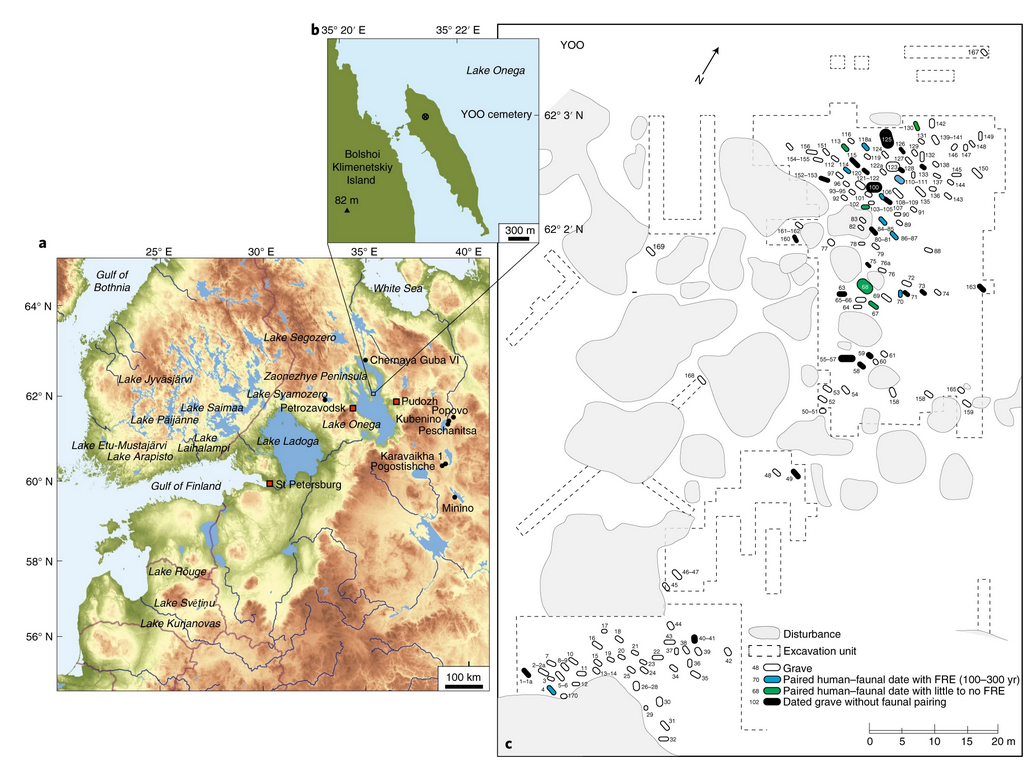
Congratulations to Dr. Rick Schulting and co-authors on the recent publication of their article in Nature Ecology & Evolution Title: Radiocarbon dating from Yuzhniy Oleniy Ostrov cemetery reveals complex human responses to socio-ecological stress during the 8.2 ka cooling event Authors: Schulting RJ, Mannermaa K, Tarasov PE, Higham T, Bronk Ramsey C, Khartanovich V, Moiseyev V, Gerasimov D, O’Shea J, Weber AW. Abstract: Yuzhniy Oleniy Ostrov in Karelia, northwest Russia, is one of the largest Early Holocene cemeteries in northern [...]

2022-01-31T13:39:23-07:00Categories: News|Tags: , , , , |

Radiocarbon dating from Yuzhniy Oleniy Ostrov cemetery reveals complex human responses to socio-ecological stress during the 8.2 ka cooling event

Yuzhniy Oleniy Ostrov in Karelia, northwest Russia, is one of the largest Early Holocene cemeteries in northern Eurasia, with 177 burials recovered in excavations in the 1930s; originally, more than 400 graves may have been present. A new radiocarbon dating programme, taking into account a correction for freshwater reservoir effects, suggests that the main use of the cemetery spanned only some 100–300 years, centring on ca. 8250 to 8000 cal BP. This coincides remarkably closely with the 8.2 ka cooling event, [...]

2023-04-04T14:10:49-06:00Categories: Journal Articles, Publications|Tags: , , , , |

Dr. Rick Schulting article published in Archaeological Research in Asia

Congratulations to Dr. Rick Schulting and co-authors on the recent publication of their article in Archaeological Research in Asia! Title: Freshwater reservoir effects in Cis-Baikal: An overview Authors: Schulting RJ, Bronk Ramsey C, Scharlotta I, Richards MP, Bazaliiskii VI, Weber AW Abstract: This paper summarises research on freshwater reservoir effects (FRE) in the Baikal region and their impact on the radiocarbon dating of human remains. Varying relationships are seen between human δ13C and δ15N values and 14C offsets in paired [...]

2021-12-20T11:13:04-07:00Categories: News|Tags: , , , , |