Weber

Dr. Ian Scharlotta article published in Archaeological Research in Asia

Congratulations to Dr. Ian Scharlotta and co-authors on the recent publication of their article in Archaeological Research in Asia! Title: Parental investment as social agency and catalyst to complexity Authors: Scharlotta I, Bazaliiskii VI, Weber AW Abstract: Re-examination of the relationships between diets as inferred isotopically and grave goods in light of new data has revealed the importance of parental investment for Early Neolithic populations in Cis-Baikal, Siberia. The Kitoi Culture developed and maintained a flexible but expensive broad-spectrum [...]
2021-12-15T09:04:58-07:00Categories: News|Tags: , , |

Parental investment as social agency and catalyst to complexity

Re-examination of the relationships between diets as inferred isotopically and grave goods in light of new data has revealed the importance of parental investment for Early Neolithic populations in Cis-Baikal, Siberia. The Kitoi Culture developed and maintained a flexible but expensive broad-spectrum subsistence strategy. Moderately high extrinsic risk factors produced periodic famines and metabolic stress evidence in skeletons. The small-scale efforts of parents to support their offspring through increased breast milk and plant food provisioning led to a [...]

2023-01-03T10:11:15-07:00Categories: Publications, Journal Articles|Tags: , , |

Alyssa White article published in Archaeological Research in Asia

Congratulations to Alyssa White and co-authors on the recent publication of their article in Archaeological Research in Asia! Title: Turning eastward: New radiocarbon and stable isotopic data for Middle Holocene hunter-gatherers from Fofanovo, Trans-Baikal, Siberia Authors: White JA, Schulting RJ, Hommel P, Moiseyev V, Khartanovich V, Bronk Ramsey C, Weber AW Abstract: A considerable amount of bioarchaeological research – including AMS 14C dating and stable carbon and nitrogen isotope analyses (δ13C and δ15N) – has been undertaken on the [...]

2021-12-15T09:07:06-07:00Categories: News|Tags: , , , |

Turning eastward: New radiocarbon and stable isotopic data for Middle Holocene hunter-gatherers from Fofanovo, Trans-Baikal, Siberia

A considerable amount of bioarchaeological research – including AMS 14C dating and stable carbon and nitrogen isotope analyses (δ13C and δ15N) – has been undertaken on the hunter-gatherers from the area west of Lake Baikal, known as Cis-Baikal. No such work has previously been reported for the east side of the lake, Trans-Baikal. Here, we present new radiocarbon dates and isotopic results for twenty individuals from the Fofanovo cemetery, located along the Selenga River on the southeast coast of [...]

2022-12-06T10:20:51-07:00Categories: Publications, Journal Articles|Tags: , , , |

New BAP lab in Irkutsk!

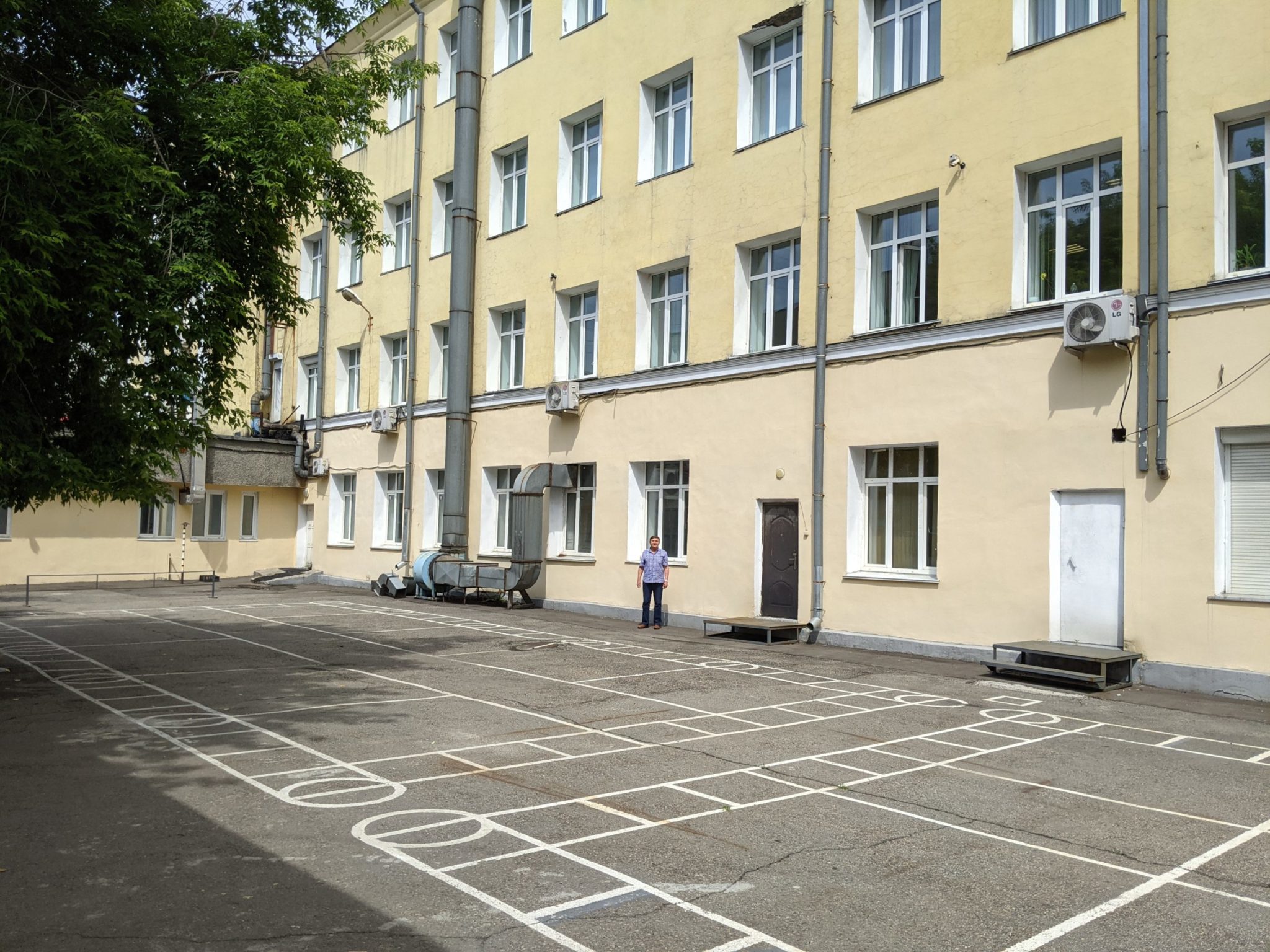
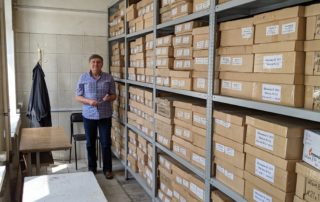
“Spirtovka” is no longer holding our BAP collections! The new and much improved lab in Irkutsk is a welcome addition for all involved! It will likely be called “Stolovaia”, because the space was used before as a student cafeteria. Here is our long-time BAP collaborator, Mr. Vladimir I. Bazaliiskii, at Stolovaia.

2021-08-18T14:55:46-06:00Categories: News, Media & Public Outreach|Tags: , |

Dr. Andrzej Weber presents talk in Usol’e-Sibirskoye, Russia!

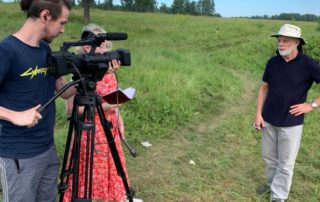
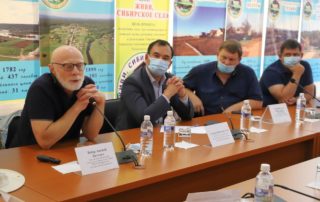
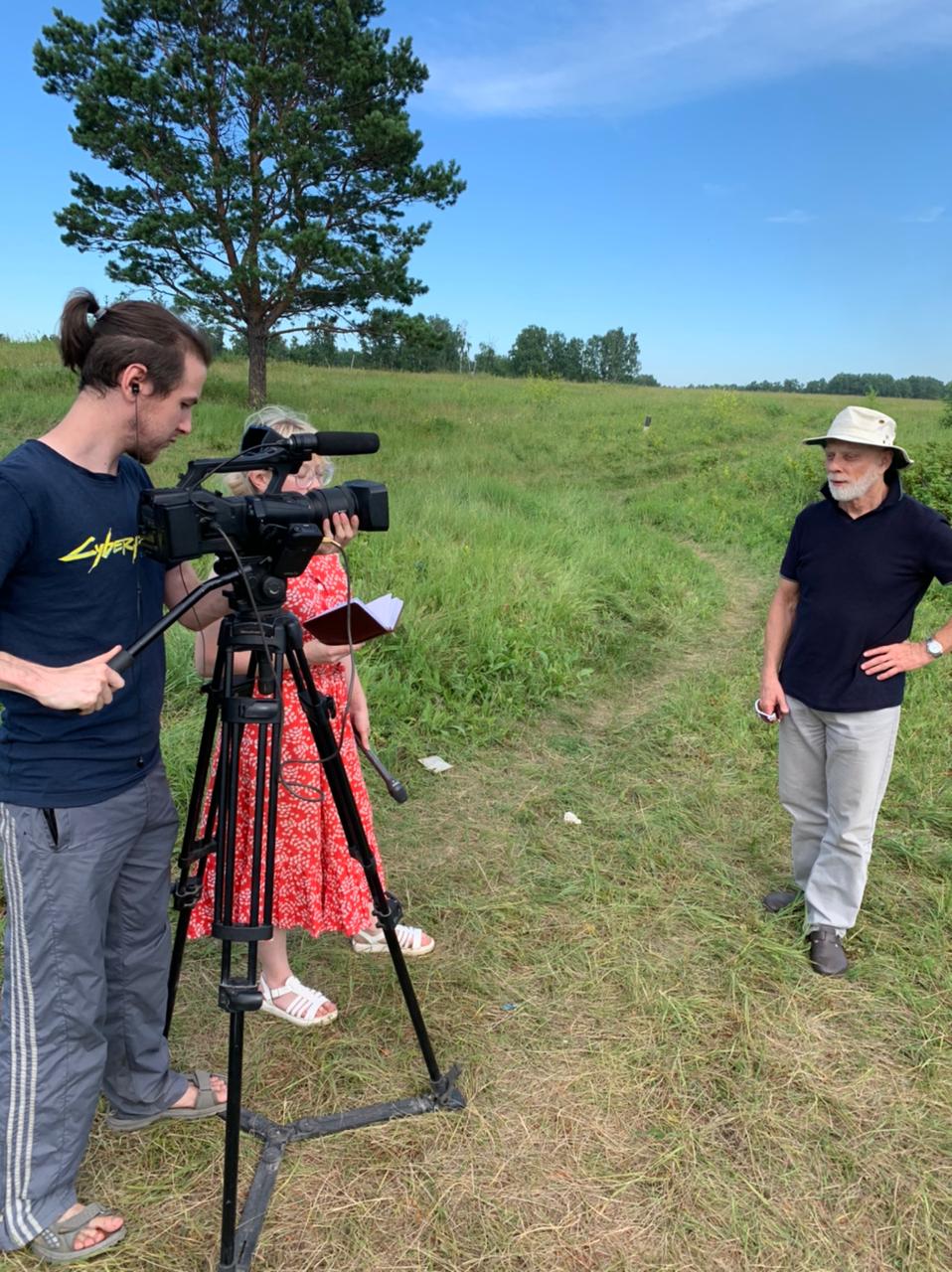
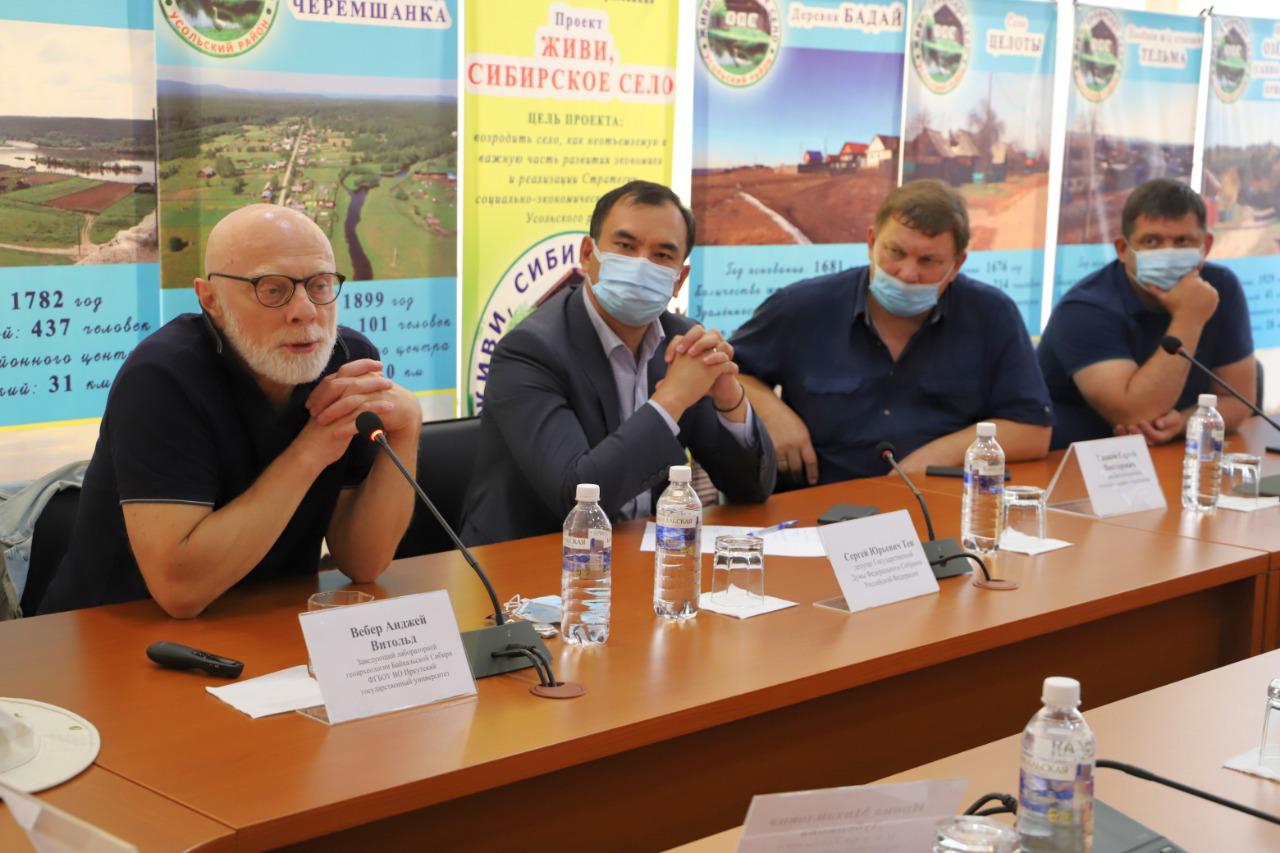
Dr. Andrzej Weber recently presented a talk in the city of Usol’e-Sibirskoye near Irkutsk, Russia. The talk was entitled “30 years of collaborative Russian–Canadian archaeological research on Lake Baikal”. The talk went well and Dr. Weber was featured in a television interview! Link to interview: https://youtu.be/8oxyl2s5Yu0?t=766

2021-08-20T10:32:07-06:00Categories: News, Media & Public Outreach|Tags: |

Vladimir Bazaliiskii paper published in Bulletin of the Irkutsk State University (Geoarchaeology, Ethnology, and Anthropology Series) 2021 [in Russian]!

Congratulations to Mr. Vladimir I. Bazaliiskii on the recent publication of his article in Bulletin of the Irkutsk State University (Geoarchaeology, Ethnology, and Anthropology Series) 2021 [in Russian]! Title: Morphological Analysis of the Bone Serrated Points from Early Neolithic Complexes of Shamanka 2 Burial Ground Authors:  Bazaliiskii VI, Tyutrin AA, Weber AW Abstract: An analysis of the bone serrated points from the burial complexes of Shamanka 2 burial ground is presented. The origin of the collection makes it [...]

2021-07-26T11:23:05-06:00Categories: News|Tags: , |

Morphological Analysis of the Bone Serrated Points from Early Neolithic Complexes of Shamanka 2 Burial Ground [in Russian]

An analysis of the bone serrated points from the burial complexes of Shamanka 2 burial ground is presented. The origin of the collection makes it “ritual”, which may explain the large number of undamaged items. Several spikes have been broken intentionally at the time of their interment. Supposedly, several points have been specifically made for interment. In accordance with the morphological analysis, we have identified two groups of serrated spikes: (I) detachable tools and (II) non-detachable tools. Differences [...]

2022-08-02T10:49:35-06:00Categories: Publications, Journal Articles|Tags: , |

Olga I. Goriunova paper published in Archaeological Research in Asia, June 2021

Congratulations to Dr. Olga I Goriunova on the recent publication of her article in Archaeological Research in Asia! Title: Middle Holocene hunter-gatherer mortuary practices in the Little Sea microregion of Lake Baikal, part 1: Early Neolithic Authors:  Goriunova OI, Novikov AG, Turkin GV, Weber AW Abstract: Archaeological research on Cis-Baikal Early Neolithic mortuary practices has traditionally focused on the Kitoi mortuary tradition with its rich materials known from several large cemeteries of the Angara Valley and Southwest Baikal. [...]

2021-05-31T11:11:41-06:00Categories: News|Tags: , , |

Middle Holocene hunter–gatherer mortuary practices in the Little Sea microregion on Lake Baikal, part I: Early Neolithic

Archaeological research on Cis-Baikal Early Neolithic mortuary practices has traditionally focused on the Kitoi mortuary tradition with its rich materials known from several large cemeteries of the Angara Valley and Southwest Baikal. Assemblages that do not fit that description have attracted much less attention. Currently, in Cis-Baikal, the Little Sea microregion has the highest number of such graves. The mortuary variation displayed by this material (31 burials from 26 graves at 8 localities) allows their provisional classification into [...]

2022-07-12T13:01:12-06:00Categories: Journal Articles, Publications|Tags: , , |